Bus Accident Lawyer in Bloomington, IL
A bus accident can leave you sorting out injuries, insurance forms, missed work, and a crash scene involving more people than a typical car accident. Maybe you were riding a Connect Transit bus near downtown Bloomington, driving through Normal when a bus merged into your lane, or helping a child injured near a school bus stop in McLean County.
Whatever happened, you need more than a quick insurance answer. Below, Dodds Law Office, PC, explains what Illinois law requires and how to protect your claim before evidence gets harder to find. Contact our bus accident lawyer in Bloomington, IL, for a free consultation.
What to Know About Bus Accident Claims in Bloomington, IL
Every bus crash is different, but a few facts hold true for most injured passengers, drivers, and pedestrians. Here’s what a bus accident lawyer in Bloomington, IL wants you to know before you talk to the insurance company.
- Bus accident claims can involve several parties, including bus companies, public agencies, school districts, and contractors, each with its own insurance and notice requirements.
- Key evidence such as onboard camera footage, maintenance records, and driver files can become harder to obtain over time, so acting early helps protect your claim.
- Illinois comparative fault rules can reduce your recovery if you were partly responsible and bar recovery if your share of fault exceeds 50%.
- Compensation may cover medical bills, future care, lost income, reduced earning capacity, pain and suffering, and permanent disability.
Why Is a Bus Accident Claim Different from a Car Accident?
Bus accident claims can spread responsibility across private companies, public agencies, school districts, maintenance contractors, and other drivers. Each entity has distinct insurance protocols and notice requirements.
Bus accidents are not the same as car accidents. A private charter bus crash differs from a school bus crash, and a public transit claim differs from a private shuttle collision—even your role in the crash matters.
A claim may look different if you were:
- A bus passenger;
- The driver or passenger in another vehicle;
- A pedestrian or bicyclist hit by a bus;
- A child boarding, exiting, or waiting near a school bus; or
- A worker injured while riding, loading, repairing, or operating around a bus.
These details influence the legal strategy. Addressing them early makes it easier to secure the correct evidence.

Hurt in a Bus Accident? You Have Options.
A bus crash can leave you juggling injuries, missed work, and calls from insurance companies you have never dealt with before. You do not have to sort it out alone. Terry Dodds brings more than 20 years of legal experience and deep Bloomington-Normal roots, and your case evaluation is free.
Request A Free ConsultationWhat Illinois Crash Rules Matter After a Bus Collision?
Illinois law mandates specific duties after certain crashes, such as reporting and rendering aid. These rules matter because they can affect the crash record, witness information, and early proof of what happened.
Drivers involved in injury crashes generally must stop, provide identifying information, render reasonable aid, and report qualifying crashes. For example, a police report is more than a formality. It preserves the first version of events before defense teams can shape a narrative to their advantage.
Who May Be Responsible When the Bus Was Only Part of the Story?
Fault may reach beyond the bus driver if unsafe policies, poor maintenance, defective parts, or another driver contributed to the crash.
- The bus driver. Speeding, distraction, fatigue, unsafe lane changes, hard braking, or failure to yield can support a negligence claim.
- The bus company or operator. The company may be responsible for negligent hiring, training, supervision, scheduling, maintenance, or dispatch practices.
- A school district or public entity. Claims involving public buses or school buses may involve special procedures and shorter practical timelines.
- Another driver. A bus driver may not be the only cause if another motorist cuts off the bus, runs a red light, or causes a chain-reaction crash.
- A maintenance contractor or parts manufacturer. Brake failures, tire issues, steering problems, or defective parts may point beyond the driver.
This is where case preparation matters. Dodds Law Office looks beyond the crash report to identify who had control, what duties they owed, and what evidence proves fault.
Meet Our Bus Accident Lawyer
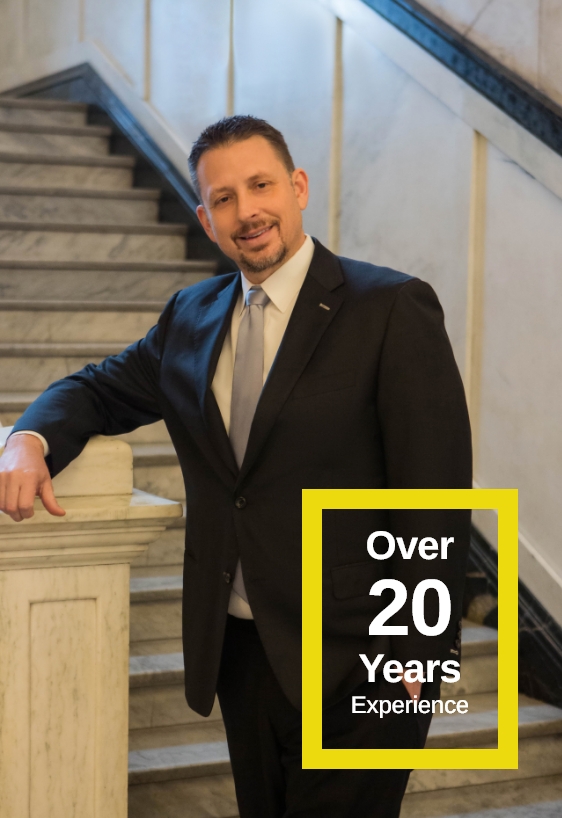
Attorney at Law
Terry Dodds | Bloomington, Illinois
Terry Dodds is a Bloomington-Normal native who has practiced law since 2000. He earned his B.A. in Criminal Justice from Illinois State University and his J.D. from Southern Illinois University School of Law.
Terry began his career as a public defender before entering private practice, where he gained extensive experience in personal injury, workers’ compensation, medical malpractice, and criminal defense. He has handled both trial and appellate matters and is committed to protecting his clients’ rights and pursuing the results they deserve.
Bar Admissions
Illinois – Since 2001
Missouri – Since 2000
Education
J.D. – Southern Illinois University, Carbondale, 2000
B.A. – Illinois State University, 1996
Publications
Equal Pay in College Coaching: A Summary of Recent Decisions
Recognition
Over 20 years of legal experience representing clients in personal injury, workers’ compensation, medical malpractice, and criminal defense matters.
Professional Associations
McLean County Chamber of Commerce — Member since 2007 Illinois State Bar Association — Member since 2006 McLean County Bar Association — Member since 2005
Ready to Discuss Your Case?
Contact Dodds Law Office for a free consultation.
What Evidence Can Disappear If You Wait Too Long?
Bus accident evidence can become harder to obtain quickly. Useful proof may include onboard camera footage, exterior surveillance video, driver qualification files, maintenance records, inspection history, route schedules, phone records, event data, scene photos, medical records, and witness statements.
You can protect your claim by taking practical steps early:
- Get medical treatment and follow your doctor’s instructions;
- Save photos of the crash scene, vehicles, injuries, and visible hazards;
- Write down the bus number, route, company name, and driver information if available;
- Keep copies of medical bills, discharge papers, prescriptions, and work restrictions;
- Avoid giving a recorded statement before you understand the claim; and
- Contact a bus accident lawyer in Bloomington, IL, before evidence is lost or the insurer narrows the story.
These steps are not meant to dramatize the case. They are about making it provable.
Can Illinois Comparative Fault Reduce Your Recovery?
Call Bloomington bus accident lawyer, Terry Dodds, at (309) 829-9300, and let’s get started with recovering the compensation you deserve. No upfront attorney fees.
See What Clients Say About Our Services
What Compensation Can You Receive After a Bus Accident?
A Bloomington bus accident claim may include compensation for medical bills, future care, lost income, reduced earning capacity, pain, disability, and other losses arising from the crash.
The value of a claim depends on the severity of the injury, insurance coverage, evidence of liability, medical documentation, and the injury’s impact on daily life. A broken arm claim may differ significantly from one involving a spinal injury, traumatic brain injury, surgery, permanent limitations, or ongoing pain.
Potential damages may include:
- Emergency treatment, hospitalization, surgery, therapy, and follow-up care;
- Medication, medical equipment, and future treatment needs;
- Lost wages and lost earning capacity;
- Pain, suffering, emotional distress, and loss of normal life;
- Scarring, disfigurement, or permanent disability; and
- Out-of-pocket costs connected to the injury.
Insurance companies often focus on what they can document quickly. Your claim should account for the full harm, not just the first stack of bills.
Should You Deal with the Insurance Company Yourself?
You can contact an insurance company yourself, but be careful if injuries are serious, fault is disputed, or multiple parties may be liable.
The Illinois Department of Insurance gives general guidance on filing a claim with another driver’s insurer, but a bus accident claim can quickly move beyond a basic insurance exchange. Adjusters may ask for recorded statements, broad medical authorizations, quick settlement discussions, or routine-looking documents that give them room to dispute the claim.
Before signing anything, ask what rights you may give up. A fast settlement can become costly if your injury worsens, you need surgery, or you cannot return to work as expected.
Let Us Protect the Evidence While You Recover
Bus camera footage and maintenance records can become harder to get as time passes. We move quickly to preserve evidence, identify every responsible party, and handle the insurance company for you. There are no upfront attorney fees.
How Does Dodds Law Office Build the Case Before the Insurance Company Defines It?
Dodds Law Office builds bus accident cases by investigating early, identifying responsible parties, documenting damages, and preparing the litigation claim when needed. Our approach is grounded in more than 20 years of legal experience and deep Bloomington-Normal roots. Injured people need direct answers, a plan, and someone willing to stand firm when the other side undervalues the case.
Our work may include:
- Reviewing the crash report, scene evidence, and information about the bus operator, owner, insurer, and other involved parties;
- Preserving video, maintenance records, and driver information;
- Coordinating medical documentation and proof of damages;
- Handling insurance communications; and
- Negotiating from a position built on evidence, not pressure.
If a settlement does not reflect the harm done, the case must be ready for the next step.
Other Serious Injury Cases We Handle in Bloomington, IL
Let Our Bloomington Bus Accident Lawyer Review Your Case
Bus Accident Questions From Bloomington Victims
Before you speak with a bus accident lawyer in Bloomington, IL, these answers can help you understand how a claim works and what to expect.
A bus accident lawyer investigates the crash early, identifies every responsible party, and works to preserve evidence such as video, maintenance records, and driver information. The lawyer also documents your damages, handles communication with insurers, and prepares the case for litigation if a fair settlement is not offered.
Responsibility can reach beyond the bus driver. Depending on the facts, the bus company, a school district or public agency, another motorist, a maintenance contractor, or a parts manufacturer may share fault. Each party may have its own insurer and notice requirements, so identifying them early matters.
Often, yes. Claims involving public transit or school buses may involve special procedures and shorter practical timelines than a typical car accident claim. Missing a notice requirement or deadline can hurt your case, so it is wise to speak with a lawyer as soon as possible after the crash.
It is best to wait until you understand your claim. Adjusters may request recorded statements or broad medical authorizations, and casual remarks like “I’m fine” can be used against you later. Speak with a lawyer first. Dodds Law Office charges no upfront attorney fees.
Local Resources for Bus Accident Victims in Bloomington, IL
After sustaining an injury in Bloomington or anywhere in McLean County, the first 72 hours matter. Whether you were hurt on Veterans Parkway, near Uptown Normal, or on I-55/I-74, knowing where to find medical care, a tow, or a rental car can make a difficult day easier. Dodds Law Office has compiled this list of trusted local resources to help Bloomington-Normal residents find the services they need.
Police & Public Safety
Bloomington Police Department
Address: 305 South East Street, Bloomington, IL 61701
Phone: (309) 820-8888
Website: Visit Website
For crash reports, non-emergency incidents, or to speak with the department directly. In a medical emergency or active crash, always call 911 first.
Accident Reports & Records
Bloomington Police Department – Crash Reports
Address: 305 S. East St., Bloomington, IL 61701
Phone: (309) 820-8888
Website: Visit Website
Crash reports can be requested online or in person. Fees may apply, and reports are generally available online within 48–72 hours.
Medical & Emergency Care
OSF HealthCare St. Joseph Medical Center – Emergency Room
Address: 2200 E Washington St, Bloomington, IL 61701
Phone: (309) 662-3311
Website: Visit Website
Provides emergency medical care for accident-related injuries and other urgent conditions.
Carle BroMenn Medical Center – Emergency Department
Address: 1304 Franklin Ave, Normal, IL 61761
Phone: (309) 454-1400
Website: Visit Website
Provides emergency care for Bloomington-Normal residents and accident victims.
Towing & Roadside Assistance
Joe’s Towing & Recovery
Phone: (309) 829-2123
Website: Visit Website
Towing and roadside assistance for accident victims and motorists in the Bloomington-Normal area.
Winks Towing Service
Address: 1902 W Market St, Bloomington, IL 61701
Phone: (309) 828-7812
Website: Visit Website
Provides 24-hour towing, lockouts, jump starts, and roadside help.
Auto Repair & Collision Services
Gerber Collision & Glass – Bloomington
Address: 1 Gilmore Dr, Bloomington, IL 61704
Phone: (309) 663-5011
Website: Visit Website
Provides collision repair services, insurance claim assistance, and repair estimates.
Bloomington Collision Repair, Inc.
Address: 1 Audie Murphy Dr, Bloomington, IL 61704
Phone: (309) 838-7061
Website: Visit Website
Handles collision repairs, insurance claims, and free estimates for damaged vehicles.
Rental Cars
Enterprise Rent-A-Car – Veterans Parkway
Address: 1206 S Veterans Pkwy, Bloomington, IL 61704
Phone: (309) 664-0100
Website: Visit Website
Rental vehicles may be useful when your vehicle is being repaired following an accident.
Enterprise – Central Illinois Regional Airport (BMI)
Address: 3201 Cira Dr, Bloomington, IL 61704
Phone: (833) 516-2244
Website: Visit Website
Rental costs may be covered under your own policy or the at-fault driver's insurance, depending on the circumstances and available coverage.
Insurance Resources
Illinois Department of Insurance – Auto Insurance Resources
Consumer Assistance Hotline: (866) 445-5364
Website: Visit Website
The Illinois Department of Insurance provides information about auto insurance claims, coverage, comparative negligence, total-loss claims, and other insurance-related issues.
Illinois Department of Insurance — Consumer Complaints
Consumer Assistance Hotline: (866) 445-5364
Website: Visit Website
The Illinois Department of Insurance may investigate certain insurance complaints and provide consumer assistance, but it does not serve as your personal attorney or provide legal advice.
Injured in Bloomington, IL or Surrounding Areas?
Contact Dodds Law Office, PC to discuss your case.
Our Bloomington, Illinois Office Location
I chose to retain Mr. Dodds after a long first conversation about my situation and what it ment for me. Every sense he has always taken the time to explain everything to me so that I understood what was going on, as well as having my best interest at stake. I am overall very pleased with my outcome and would recommend you retain him. He cares, and you can tell by the late hours he works/ responds to your communication to him as well as when he is speaking to you. 10/10 recommend.